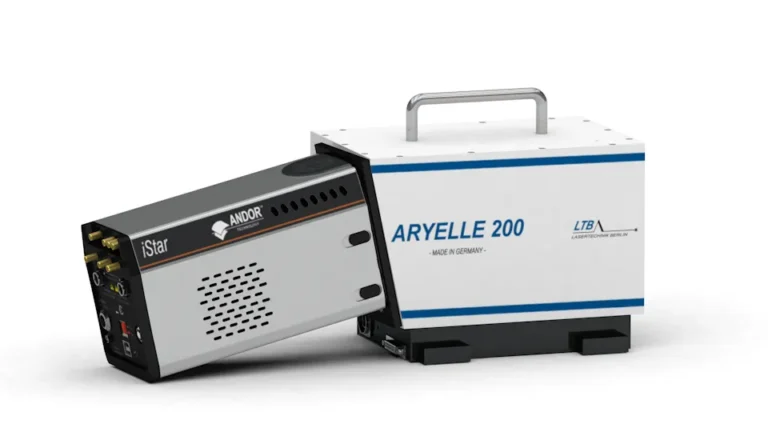



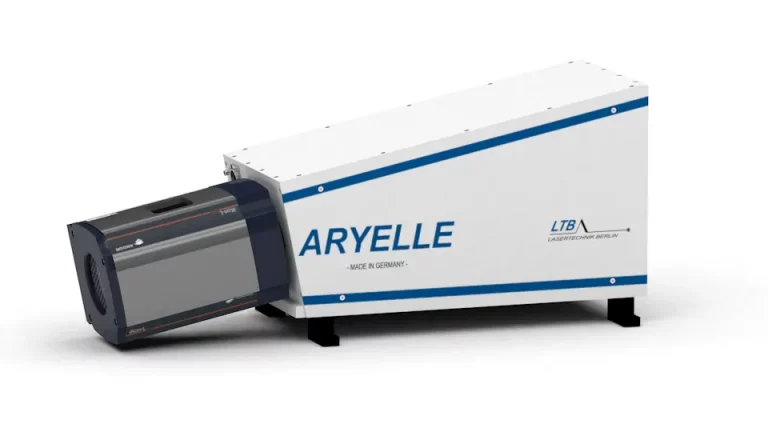
ARYELLE 400
With a focal length of 400 mm and a focal ratio of f/10, the ARYELLE 400 is the spectrally highest-resolution…
The powerful wide-range dual spectrograph has two separate spectral ranges for the VUV and UV-VIS-NIR bandwidths, each with a focal length of 400 mm and a common detector - for maximum flexibility in precise elemental analysis with LIBS and Raman spectroscopy.
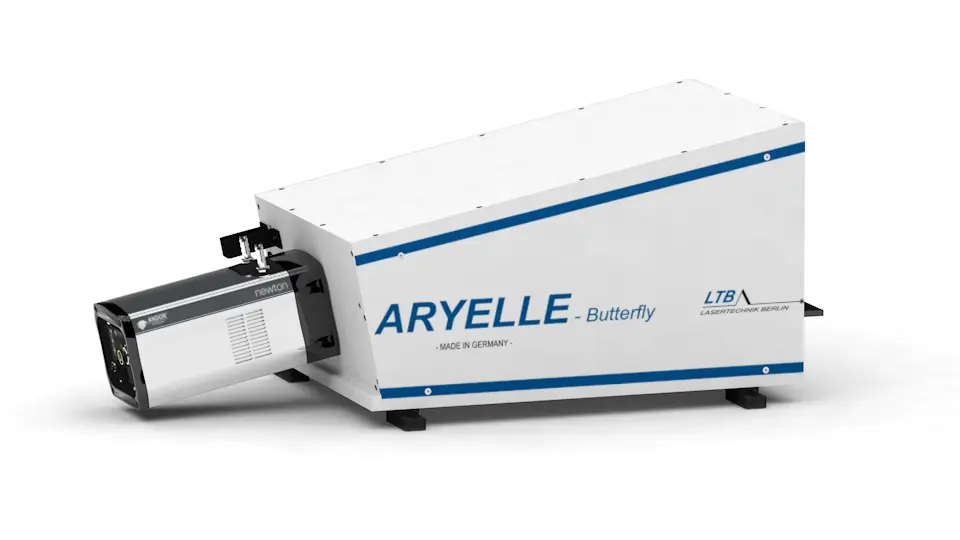
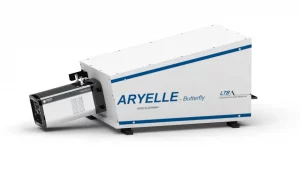
The ARYELLE Butterfly is an optically very sophisticated Double-Echelle spectrograph of the renowned ARraY echELLE series from LTB Lasertechnik Berlin. Originally developed as a special solution, it combines two spectrally separated ARYELLE 400 spectrometers in a single compact and thermally stable housing. The special feature of this design is the sequential imaging of two two-dimensional echelle spectra on a common detector. As the detector can often contribute significantly to the overall cost of such a system, this innovative architecture offers a cost-effective solution with the added benefit of having a rather small footprint. It combines extremely wide coverage of the spectral range with an exceptionally high spectral resolution.
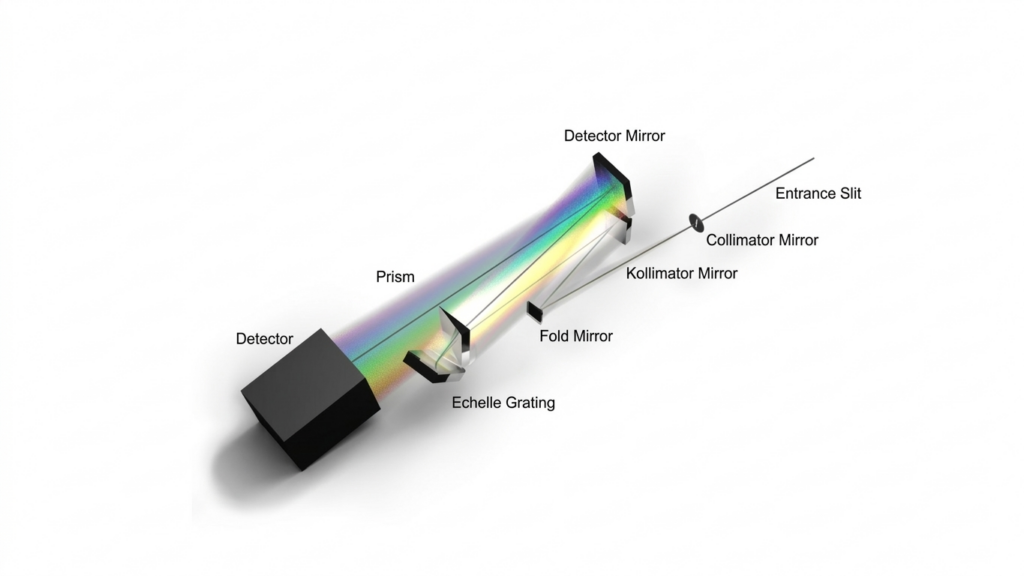
The ARYELLE Butterfly system is designed for maximum variability and covers the full range of Vacuum-UV (VUV) as well as ultraviolet, visible and near-infrared spectral ranges (UV-VIS-NIR). Each of the two partial separated spectrometers has a focal length of 400 mm and an opening ratio of f/10, which guarantees a high light throughput. The dispersive elements used in this design are following the Echelle principle, and are constructed according to it. Each spectrometer wing consists of a high-quality echelle grid, a prism for order separation, precise imaging optics and a narrow input slit.
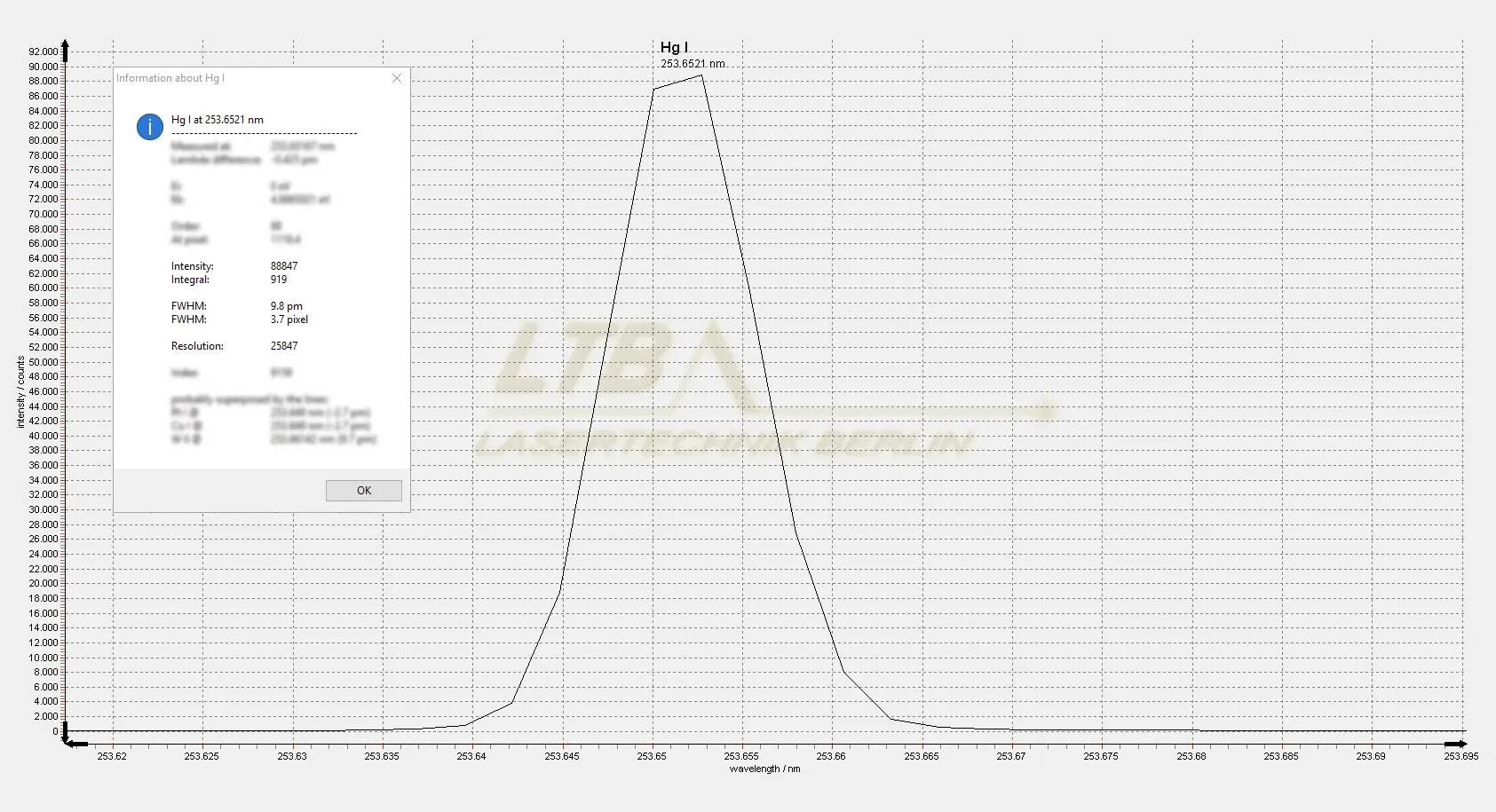
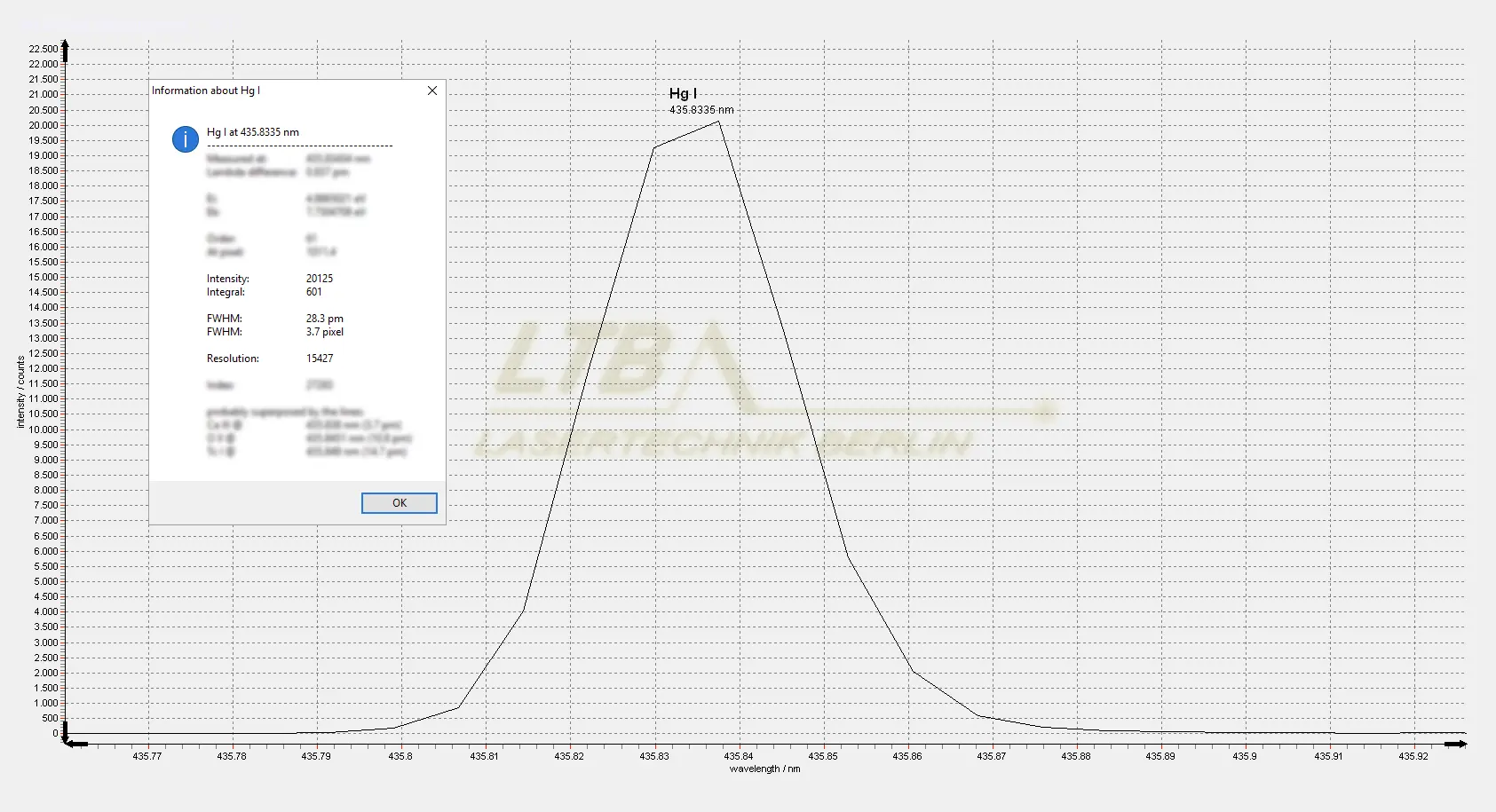
Thanks to this dual wing design, the simultaneously measurable wavelength ranges and the achievable spectral resolution of the ARYELLE Butterfly can be individually tailored to almost any scientific or industrial application. For example, typical configurations allow for a spectral resolution (λ/Δλ) of up to 50,000 – or a few pm – in the VUV range (175–330 nm) and 15,000 to 30,000 in the UV-VIS-NIR range (330–850 nm). Thanks to the large detector area of 27 x 27 mm2, the ARYELLE Butterfly is compatible with a large number of modern detectors, including highly sensitive CCD, fast sCMOS and time-resolved ICCD cameras.
A decisive advantage of the ARYELLE Butterfly is the minimisation of chromatic aberrations. This is achieved through the consistent use of reflection optics with special broadband UV coatings and the use of CaF2 prisms. Two paths are available for the light coupling: a flexible SMA fibre for the UV-VIS-NIR range or a pure reflection transfer optics, which is essential in particular for the VUV range below 200 nm. Conventional fibres absorb an enormous amount of light in this area.
In order to ensure the highest precision even in changing ambient conditions, the device has an internal shutter and an integrated calibration lamp. This enables a fully automatic recalibration of the wavelength scale during operation, which is of great importance especially in long-term measurements or in industrial process monitoring.
The user-friendly control and evaluation software Sophi nXt, an in-house development of LTB, controls all spectrometer and detector functions and takes over the entire measurement sequence control.
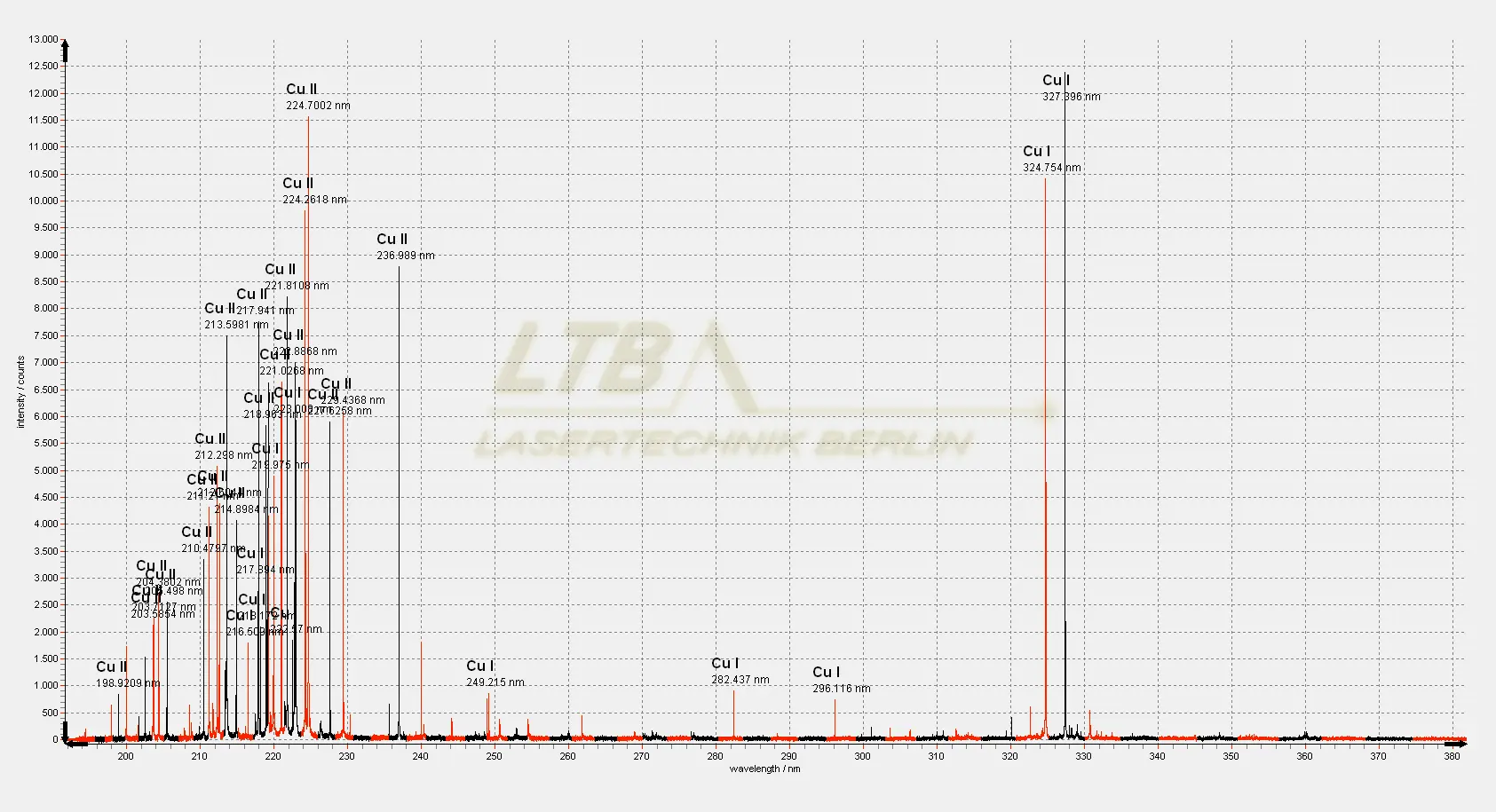
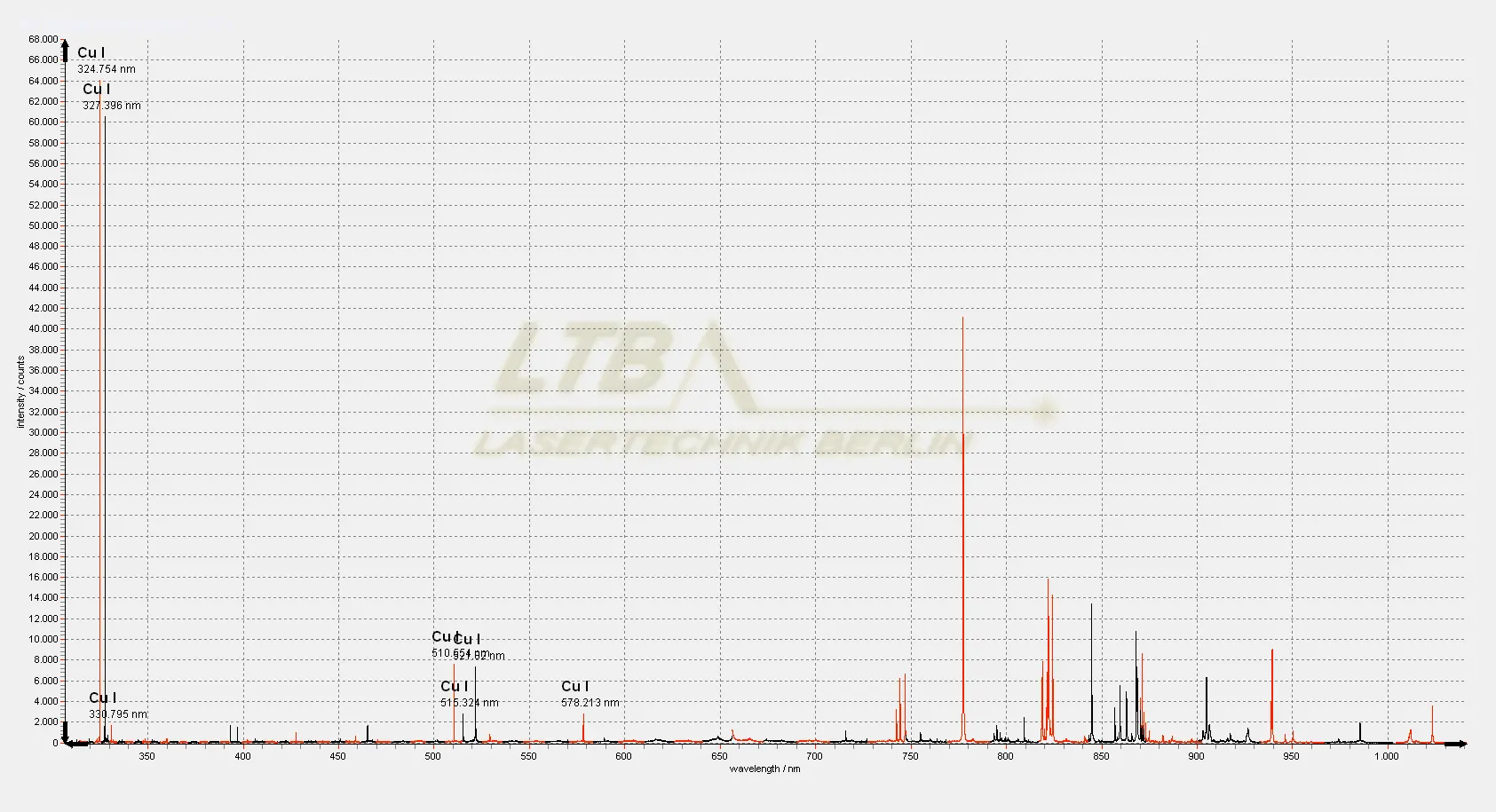
After the allocation of the raw data to the corresponding wavelengths, all lines of the spectrum are automatically analysed using an integrated database. The database includes more than 50,000 lines. If possible, the lines are specified and assigned to the respective elements. The database can be edited and extended by the user at any time; it is based on the “Strong Lines of the NIST Spectra Data Base”.
Thanks to the auto-calibration function of the software, the ARYELLE Butterfly can be calibrated easily, quickly and fully automatically using the included calibration lamp.
The ARYELLE Butterfly is the ideal instrument for demanding applications due to its high resolution and broadband. In laser-induced plasma spectroscopy (LIBS), it enables simultaneous detection of light elements (such as lithium or beryllium) in the VUV and heavier metals in the visible range. Other fields of application can be found in Raman spectroscopy, material testing, fusion research and environmental analysis, for example in the investigation of sediments or ores. Thanks to its robustness and compactness, it bridges the gap between high-resolution laboratory diagnostics and industrial quality control.
| Setup | 1 | 2 | 3 |
|---|---|---|---|
| Detector | CCD | CCD | ICCD |
| Wavelength range1 | 190-330 nm / 330-850 nm | 190-405 nm / 400-930 nm | 192-433 nm / 425-750 nm |
| Spectral resolution λ/min. measurable FWHM1 | 30,000 / 15,000 | 45,000 / 37,500 | 14,000 / 20,000 |
| Spectral resolution1,2 | 6-11 pm / 22-57 pm | 4.2-9 pm / 11-25 pm | 13-31 / 21-37 pm |
| Detector resolution | 2,048 x 512 px | 2,048 x 2,048 px | 1,024 x 1,024 px |
| Detector image area | 27.6 x 6.9 mm² | 27.6 x 27.6 mm² | 13.3 x 13.3 mm² |
| Chopper | Yes | Yes | No |
| Step width, min. | 0.1 µs | 0.1 µs | 1 ns |
| Door width | - | - | 5 ns |
 ARYELLE Butterfly |  ARYELLE 200 | Compare product Select product |
|---|