


Introduction
At LTB Lasertechnik Berlin GmbH, we specialise in high-performance Echelle spectrometers tailored specifically for Laser-Induced Breakdown Spectroscopy (LIBS). LIBS is a rapidly evolving, versatile analytical technique that provides rapid elemental analysis across solids, liquids, and gases. However, no single technique is a universal remedy for every analytical challenge. Knowing what LIBS can do, and equally, what it cannot do, is key to choosing the right tool for your application.
What LIBS Does Exceptionally Well
1. Rapid Multi-Elemental Detection
A single laser pulse vaporises a tiny fraction of the sample surface, forming a high-temperature micro-plasma. As this plasma cools, emitted light reveals the atomic fingerprint of the sample. When paired with high-resolution spectrographs, such as our LTB ARYELLE series, LIBS captures the full spectral signature all the way from UV to NIR. It can simultaneously detect lighter and heavier elements in a matter of milliseconds.
2. Sensitivity to Light Elements
Unlike X-ray Fluorescence (XRF), which struggles with low-atomic-number elements, LIBS detects light elements easily. Elements such as lithium, beryllium, boron, carbon, hydrogen, and sodium produce strong optical emission lines, making LIBS essential for battery research, metallurgical sorting, and geological surveys.
3. Virtually Zero Sample Preparation
LIBS operates directly on raw samples. There is no need for acid digestion, vacuum preparation, or complex cutting:
- Analysed “as is” in atmospheric conditions.
- Eliminates chemical consumable costs and toxic waste.
- Speeds up workflow from hours to fractions of a second.
4. Micro-Destructive & Spatially Resolved Analysis
Because each laser pulse consumes only nanograms to micrograms of material, the crater left behind is often microscopic (tens of micrometres wide). This yields distinct spatial advantages:
- Depth Profiling: Repeated firing on a single point reveals coatings, oxide layers, or surface treatments layer-by-layer.
- Chemical Mapping: Scanning across a surface creates high-resolution 2D compositional maps of heterogeneous materials or inclusions.
Technical Limitations: What LIBS Cannot Do (and How to Mitigate Them)
Understanding the physical boundaries of optical emission spectroscopy ensures realistic expectations and optimal system setup.
| Analytical Limit | Physical Cause | Real-World Impact | LTB Engineering Solution |
| Matrix Effects | Differences in sample hardness, reflectivity, and thermal conductivity alter how the laser ablates material. | Calibration curves built for one alloy type cannot be applied directly to a different material matrix without correction. | Advanced multivariate calibration, chemometric algorithms in software (e.g., LTB’s Sophi nXt), and matrix-matched standards. |
| Ultra-Trace Quantification (< 1 ppm) | Plasma emission background noise masks extremely weak spectral signals. | LIBS typically targets limits of detection (LoD) in the ppm range, making it less suitable for sub-ppb trace analysis than ICP-MS. | Maximised optical throughput, optimised gating delay, and ultra-high spectral resolution (down to pm and fm) to isolate peak signals. |
| Shot-to-Shot Fluctuations | Micro-variations in laser energy, surface morphology, and local dust alter plasma temperature. | Single-shot measurements carry higher relative standard deviation (RSD) than classical wet chemistry. | Averaging multiple laser shots, applying internal standard normalisation, and using stable short-pulse laser excitation. |
| Direct Isotopic Precision | Isotope shifts in atomic spectra are extremely small (fractions of a picometer). | Standard LIBS cannot easily resolve isotopes of heavy elements (e.g., uranium, lead) without specialised molecular/laser setups. | High-dispersion double-wing optical designs (e.g., ARYELLE Butterfly) that isolate adjacent sub-picometer spectral lines. |
Key Considerations for System Selection
To achieve reliable quantitative results, match your setup to these critical variables:
- Spectral Resolution vs. Coverage: Broad wavelength coverage ensures you don’t miss unexpected elements, while high spectral resolution prevents line overlap in complex spectra like iron or titanium alloys.
- Laser Parameters: Pulse width, energy, and repetition rate dictate ablation stability.
- Detector Timing: Precise microsecond gating (delay time and gate width) separates strong background continuum radiation from discrete element emission lines.
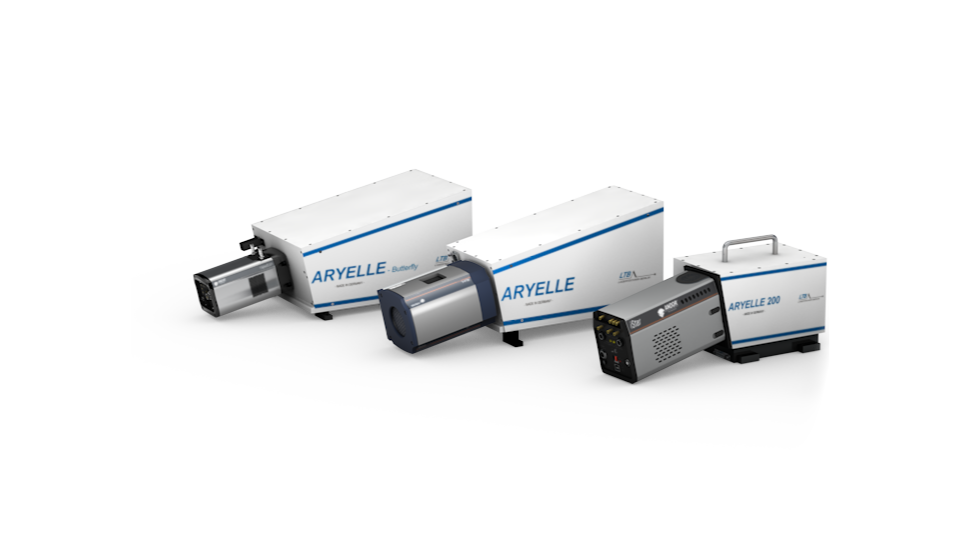
Explore LTB instrumentation options:
LTB Aryelle Spectrometer Family ideally suited for LIBS Applications