

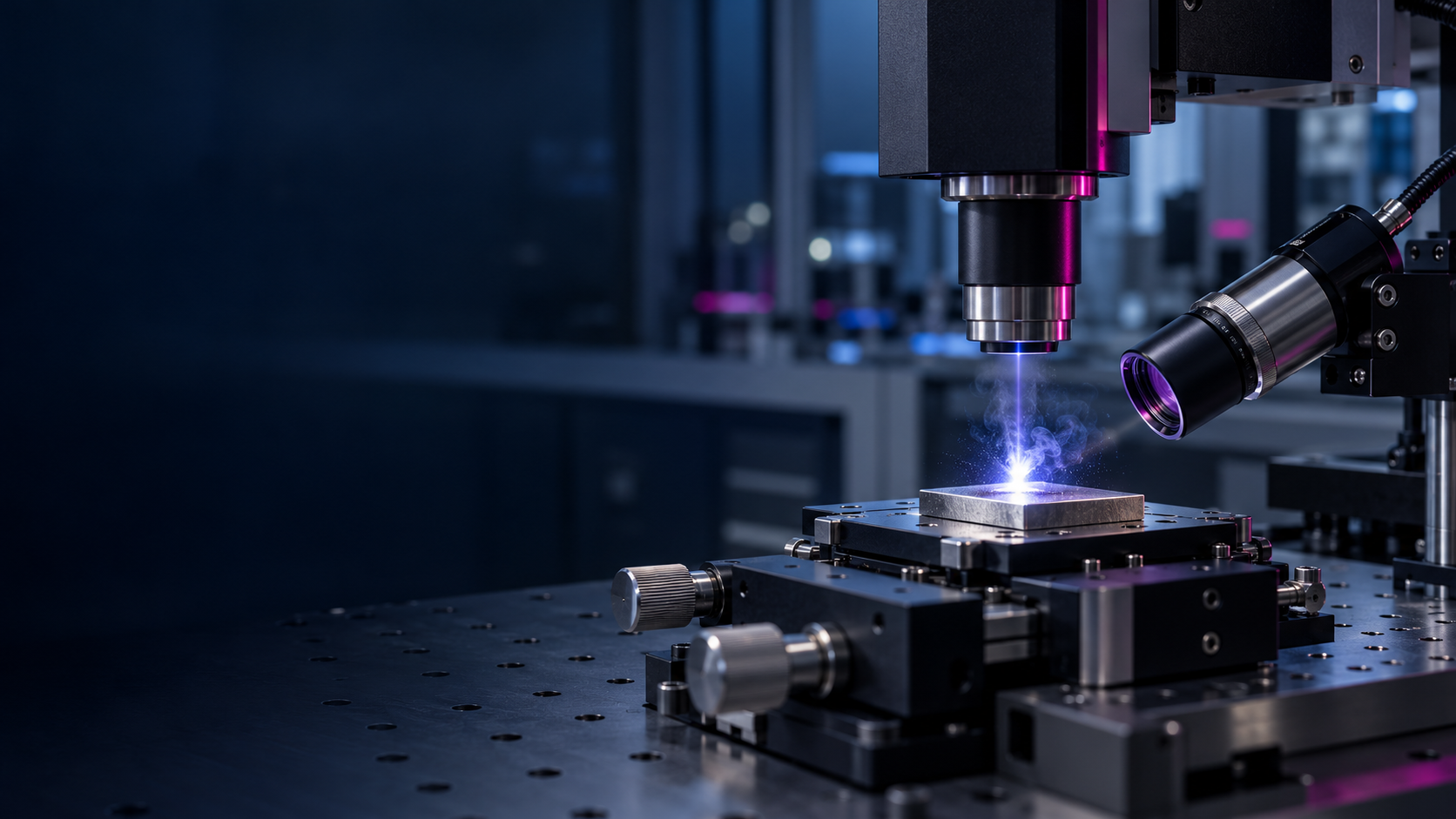
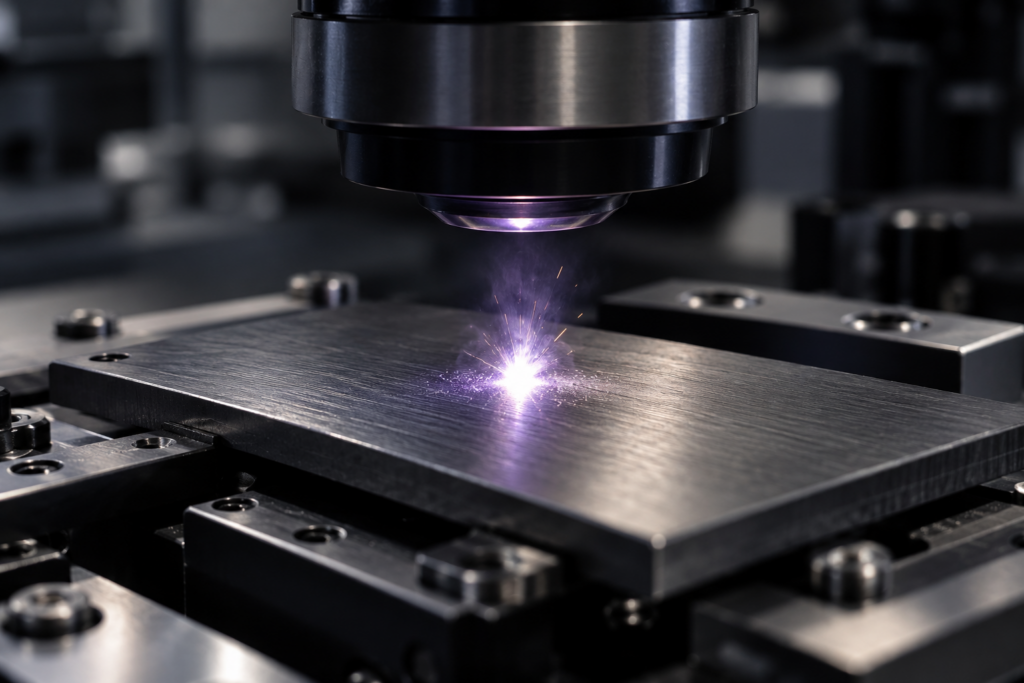
LIBS (Laser-Induced Breakdown Spectroscopy) is a technique for elemental analysis. A short, focused laser pulse generates a plasma on the sample. Its light is analysed using a spectrometer, providing information about the elements present.
The technique enables the rapid analysis of different materials – from identifying individual elements to determining their concentrations. Spatially resolved analysis and depth profiling are also possible.
How does LIBS work?
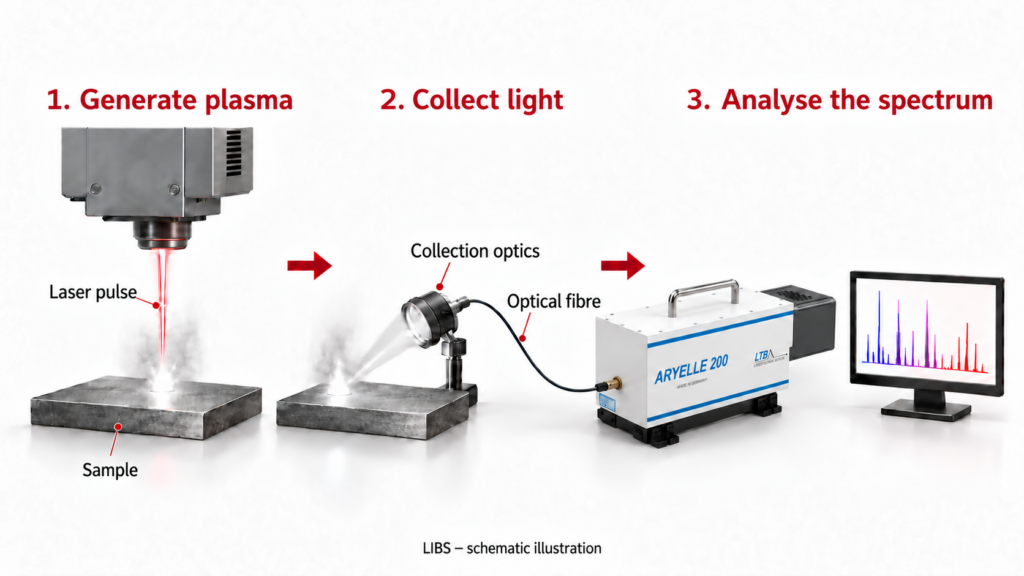
A short, high-energy laser pulse is focused onto the sample. This ablates a small amount of material and generates a plasma. The plasma emits light with characteristic spectral lines, which is collected by a spectrometer. These lines allow the elements present to be identified; with suitable calibration, their concentrations can also be determined.
The measurement principle at a glance
LIBS explained in a video
What information does LIBS provide?

Elemental identification
The characteristic spectral lines indicate which elements are present in the sample being analysed.
Quantitative analysis
Suitable reference materials and calibration enable the concentrations of selected elements to be determined.

Elemental mapping
Measurements at multiple positions reveal how elements are distributed across a surface.
Depth profiling
Repeated laser pulses at the same position progressively ablate material. This allows changes in composition to be investigated with increasing depth.
Strengths and limitations at a glance

Strengths
- Rapid analysis of multiple elements in a single measurement
- Often little or no sample preparation required
- Non-contact measurement, including at longer working distances
- Spatially resolved analysis and depth profiling
Limitations
- Localised material removal at the measurement position
- Influence of the sample matrix on the measured signal
- Suitable calibration required for quantitative results
- Detection limits depend on the element, material and measurement setup
What matters when planning a measurement?
Sample and analytical task
The material, surface condition and homogeneity influence the measurement. It also matters whether individual points, larger areas or layers are to be investigated. These factors determine the requirements for sample preparation, focusing and positioning.
Elements and concentrations
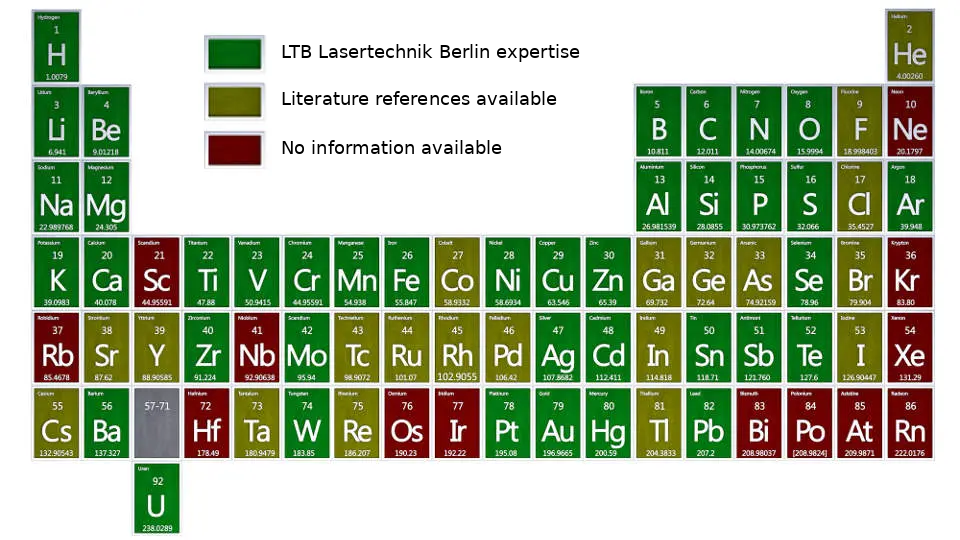
Which elements need to be detected, and over what concentration range? Material identification has different requirements from the determination of low elemental concentrations. Achievable detection limits depend on the element, sample matrix and measurement conditions.
Laser, spectrometer and detector
Pulse energy, pulse duration and focal spot size influence material ablation and plasma generation. The spectrometer’s wavelength range and resolution determine which spectral lines can be recorded and resolved. Time-gated detection helps to selectively measure the characteristic line emission.
Calibration and data analysis
For elemental identification, measured spectral lines are compared with reference data. Quantitative analysis generally requires suitable reference materials and calibration. Repeated measurements help to assess variability and obtain reliable results.
LIBS applications
LIBS is used in research and industry for material analysis, quality control and process monitoring. The following examples illustrate typical applications.
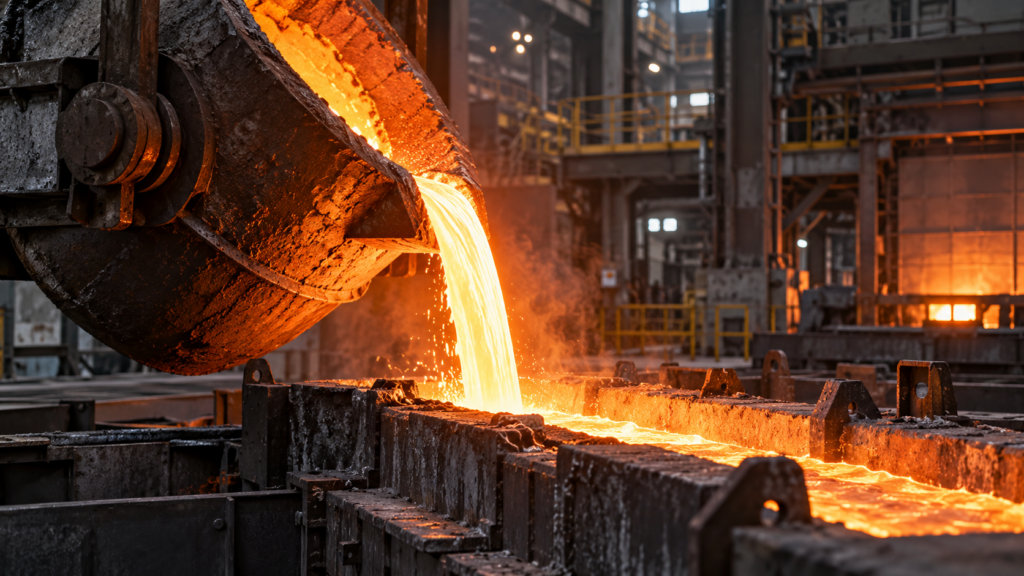
Metallurgy
Analysis of the elemental composition of metals and alloys, material identification and process control.
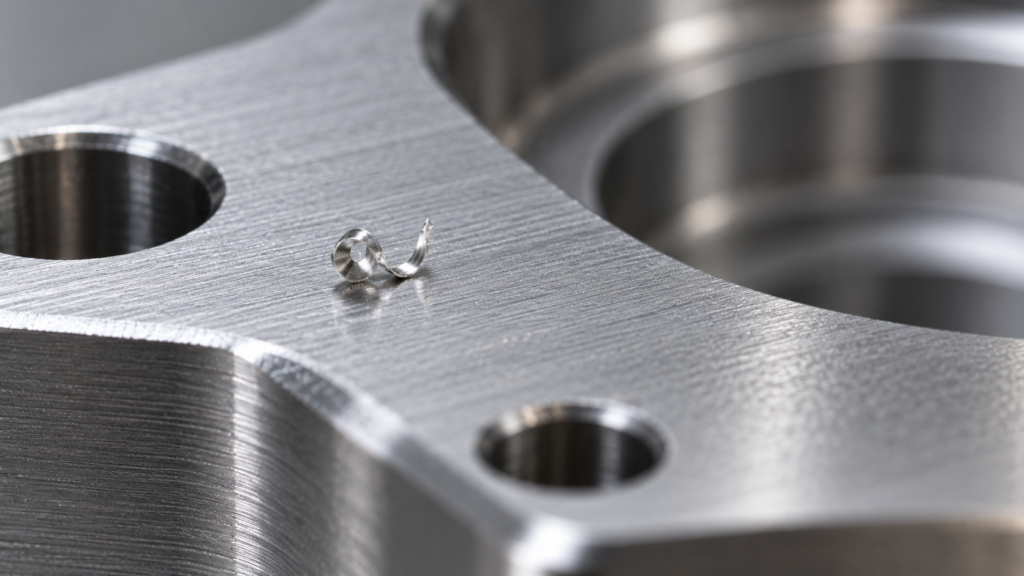
Technical cleanliness
Elemental analysis of individual particles on component surfaces to characterise contaminants and help identify their origin.
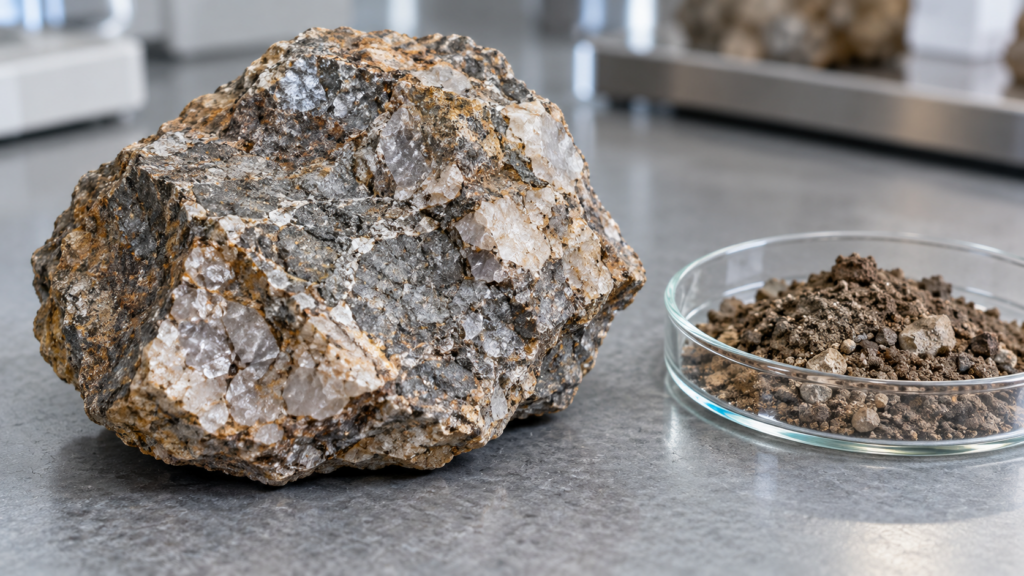
Geology and environmental analysis
Analysis of rocks, minerals and soils to determine their elemental composition and distinguish between materials.
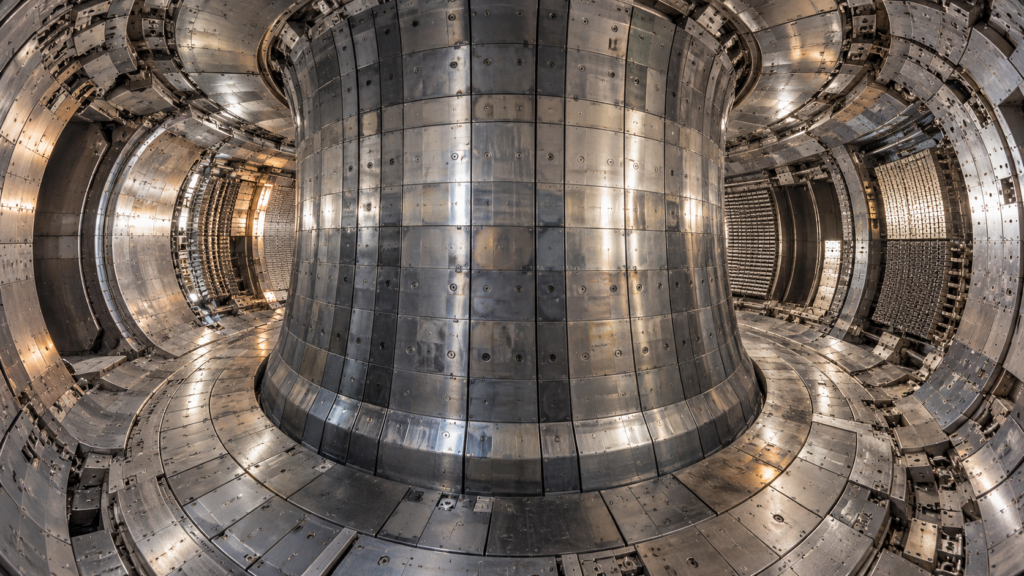
Fusion research
Investigation of wall materials and deposits, for example to analyse material erosion and fuel residues.
The right LIBS solution for your analytical task
Whether you need a spectrometer for your own measurement setup or a complete LIBS analysis system, LTB helps you select a suitable solution. Your sample, target elements and measurement requirements are the starting point.
Echelle spectrometers
A broad simultaneously recorded wavelength range and high spectral resolution support the analysis of complex LIBS spectra. ARYELLE spectrometers can be integrated into customised measurement setups.
Explore echelle spectrometersLIBS analysis systems
For laboratory analysis and application-specific measurements, LTB offers complete systems combining a laser, optics, a spectrometer and sample positioning.
Explore LIBS analysis systemsWould you like to analyse your sample using LIBS?
Discuss your analytical task with us. Together, we can determine which setup and measurement conditions suit your application.
Discuss your application