


Revolutionising Particle Analysis: Unlocking Microscopic Insights with LTB’s LIBS & Raman Solutions
The secure identification of particles is of importance in several fields, from safeguarding our environment to advancing pharmaceutical research. Concrete examples are material testing, technical cleanliness and forensics. Especially in the latter two areas, precise knowledge of the material type of a found particle is essential for determining its origin or attribution.
At LTB Lasertechnik Berlin GmbH, we are proud to not only offer cutting-edge Laser-Induced Breakdown Spectroscopy (LIBS) systems but also advanced Raman spectroscopy solutions that in combination are going to transform particle analysis by providing unparalleled capabilities and microscopic insights into particle composition and characteristics. In thins article we want to demonstrate the potential of our combined Raman-LIBS-System (CORALIS) for the analysis of different particles.
LIBS and Raman for Comprehensive Particle Characterisation:
Both LIBS and Raman are optical spectroscopy methods. LIBS (laser-induced breakdown spectroscopy) identifies the elemental composition of the particles and is therefore very suitable for metal particles as well as for mineralogical samples. The advantage of LIBS for this application is that it can detect nearly all elements, can be performed in air, is fast and requires no sample preparation. LTB’s LIBS technology enables rapid and often non-destructive identification of particles based on their precise elemental composition. By analysing the characteristic emission spectra produced by the laser-induced plasma, our Echelle spectrometers can pinpoint the elements present in individual particles.
Raman spectroscopy can identify the molecular composition and is therefore suitable for organic and crystalline samples, among other minerals and polymers.
These spectroscopic technologies are invaluable for:
Environmental Monitoring: Swiftly identifying airborne particles to trace pollution sources or detect hazardous materials.
Particle Size Analysis: Correlating the intensity of specific emission lines with particle size standards allows researchers to accurately estimate the size distribution of particles in a sample. This is critical in fields like pharmaceuticals, where particle size directly impacts drug efficacy and stability.
Elemental Mapping of Particles: When coupled with advanced imaging techniques, LTB’s LIBS Raman systems allow for detailed elemental mapping. By scanning the laser beam across an individual particle or a collection, researchers can create intricate elemental maps that reveal the spatial distribution of different elements within the sample. This capability is vital in materials science, geology, and forensics for understanding material composition, origin, and processing history.
Surface Analysis of Particles: By focusing the laser beam on the particle surface, our systems provide elemental information specifically from the outermost layers. This allows for the precise detection of surface contaminants, coatings, or subtle variations in composition that can significantly impact a particle’s behaviour or functionality.
Quality Control in Manufacturing: LIBS is an indispensable tool for quality control of particles used in various products. By analysing the elemental composition of particles during production, manufacturers can ensure consistency and strict adherence to specifications. This is particularly relevant in sectors dealing with ceramics, powders, and metal alloys.
Why Choose LTB for Your Particle Analysis?
LTB Lasertechnik Berlin GmbH stands at the forefront of LIBS-Raman innovation. With the CORALIS instrument, Raman and LIBS measurements can be performed sequentially within one run. With the combination extensive elemental and chemical information on the sample can be obtained.
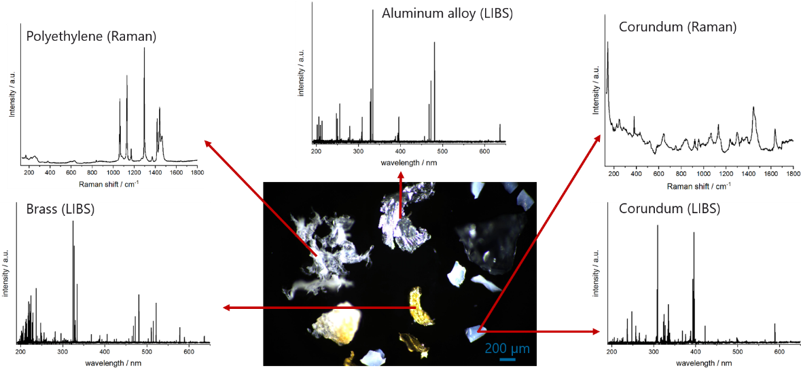
Figure 1: Microscopic image as well as LIBS and Raman spectra of different particles obtained with the CORALIS instrument.
Due to the small laser spot and the high resolution of the imaging optics of the instrument even particles down to a size of 50 µm can be analysed (Figure 2).
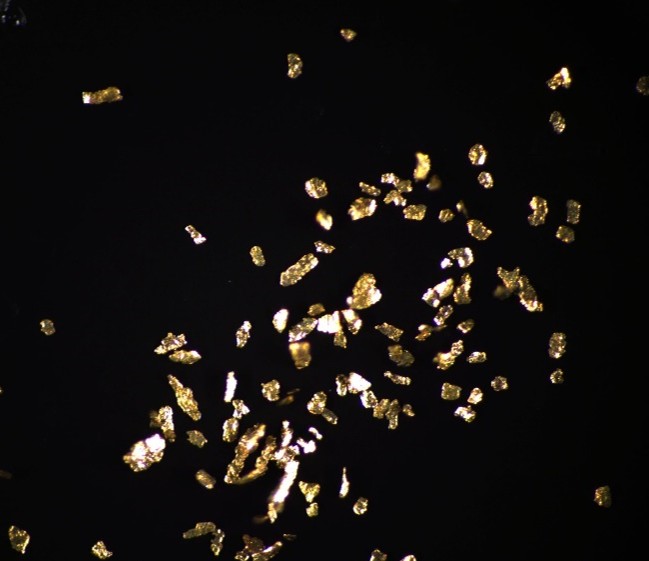
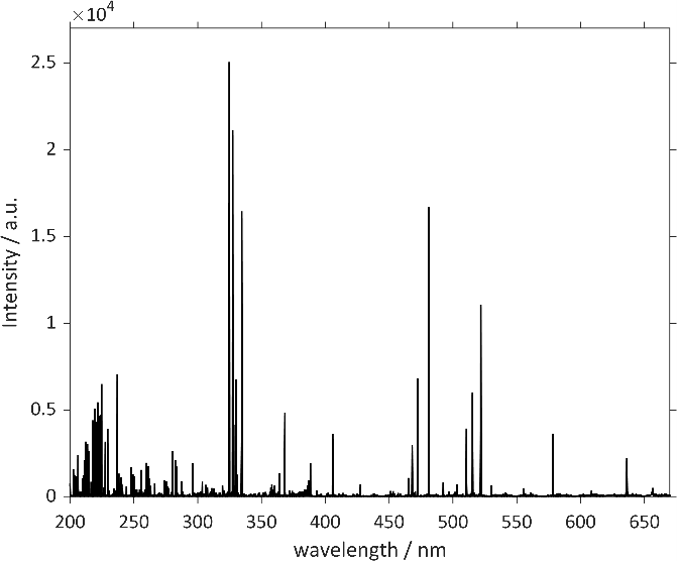
Figure 2: Micrograph (left) and LIBS spectrum (right) of brass particles with a Ferret diameter smaller than 45 µm. Both the image and the spectrum were recorded with the CORALIS instrument. The LIBS spectrum was measured with a laser wavelength of 1064 nm and an energy of 5 mJ per pulse. Due to the small size of the particles only two pulses were accumulated for the spectrum.
For the analysis several methods are available on the instrument. For LIBS a classification method is available for three base classes (aluminum, iron, copper) and differing numbers of subclasses (in total 12 classes) which are shown in Figure 3.
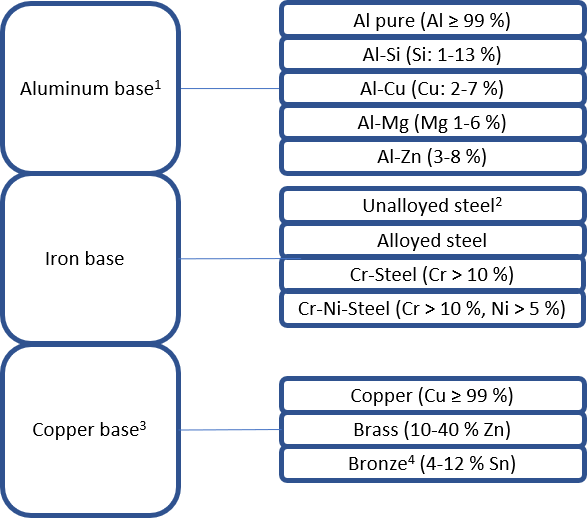
Figure 3: Base and subclasses that could be identified with the material classification. 1Classification and concentration ranges in accordance to DIN EN 573-3:2019, 2classification in accordance with EN 10029_2000, 3classification in accordance with „Deutsches Kupferinstitut“, 4incl. gun metal
If the material doesn’t belong to one of these classes a line identification can be performed on the spectrum to obtain information about the elements present in the sample.
When aluminum or alloyed steel is detected additional information on the content of different alloying elements are given.
Table 1 and Table 2 show classification rates for nineteen different samples (Eleven bulk samples and eight particulate samples of different sizes down to 45 µm). The measurements on the bulk samples were performed in the same way as the measurements for building up the method. For the particles the number of laser shots was reduced depending on the size of the particles (two laser shots for particles smaller 45 µm and five laser shots for all other sizes). Prior to analysis spectra with very low intensity have been removed.
The results show classification rates above 95 % for nearly all samples. Even small particles could be classified with good classification rates (up to 100 %).
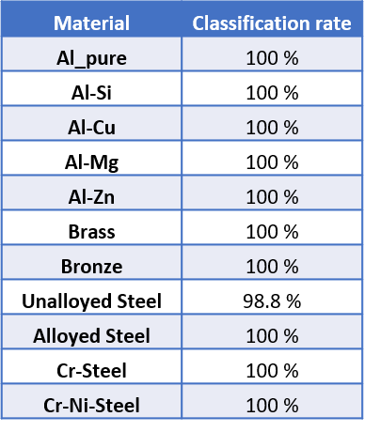
Table 1: Classification rate (percentage of correctly classified spectra) for bulk samples. The results are from five independent measurement sessions performed on different days. Within each session 64 spectra per material were recorded on different spots on the sample and the spectra were analyzed individually.
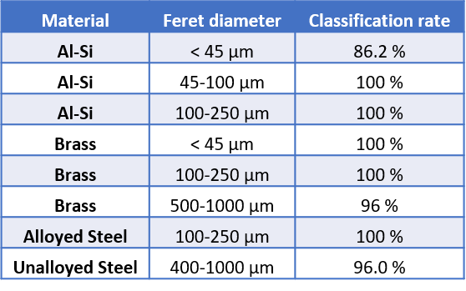
Table 2: Classification rate (percentage of correctly classified spectra) for particles. The results are from five independent measurement sessions performed on different days. Within each session five particles per size range and material were measured and the spectra analyzed individually.
To identify molecular structures with Raman spectroscopy the measured spectra can be transferred to the KnowItAll®-Database from Wiley and analysed.
Summary
In summary, Laser-Induced Breakdown Spectroscopy (LIBS) offers a wealth of applications in particle analysis. With LTB’s advanced LIBS systems, researchers and industries can gain invaluable insights into particle composition, size distribution, elemental mapping, surface analysis, and quality control. Its non-destructive nature, rapid analysis capabilities, and ability to analyse particles at the microscopic level solidify LIBS as an indispensable tool for understanding and characterizing particles across a wide range of fields. The solution can be paired with Raman spectroscopy to further expand the range of applications.
Uncover the hidden details in your particles with LTB’s LIBS solutions. Contact us today to learn more.
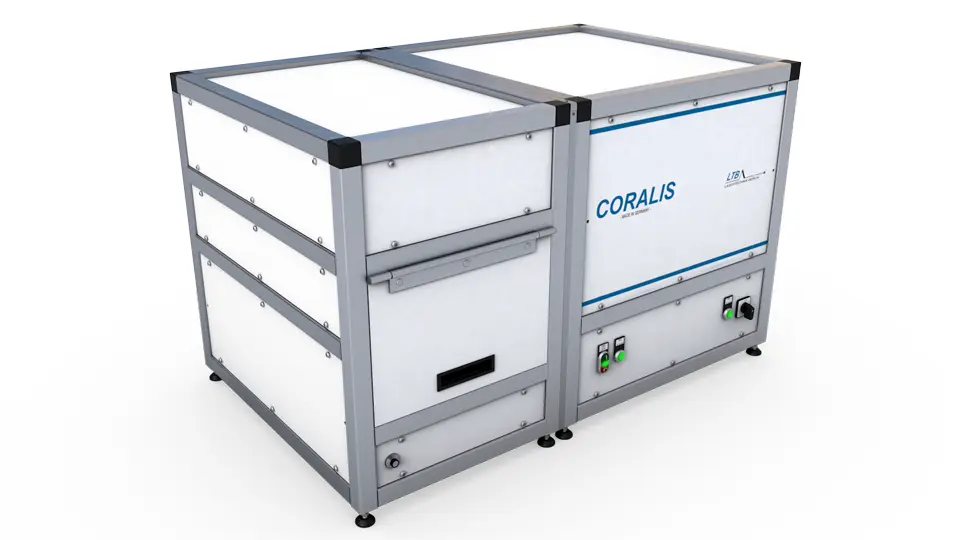
LTBs CORALIS combined LIBS-Raman analyser ideal for particle analysis
References
M. Lanzinger, D. Huber, V. Merk, S. Kaufmann, M. Schuster, N. Ivleva, Development of laser-induced breakdown spectroscopy-methods for rapid element quantification in alloy particles in technical cleanliness analysis. Spectrochim. Acta B, 205 (2023), 106691.
M. Lanzinger, S. Kaufmann, M. Schuster, N.P. Ivleva, LIBS as a fast and reliable alternative to μXRF and SEM–EDX for quantitative analysis of aluminium alloy particles in technical cleanliness analysis. Microchem. J., 207 (2024), 111782
L. Pfeifer, V. Merk, S. Damaske, W. Werncke, Kombinierte LIBS- und Ramanspektroskopie zur Partikelanalyse. JOT, (2020)